Volume One · Available now
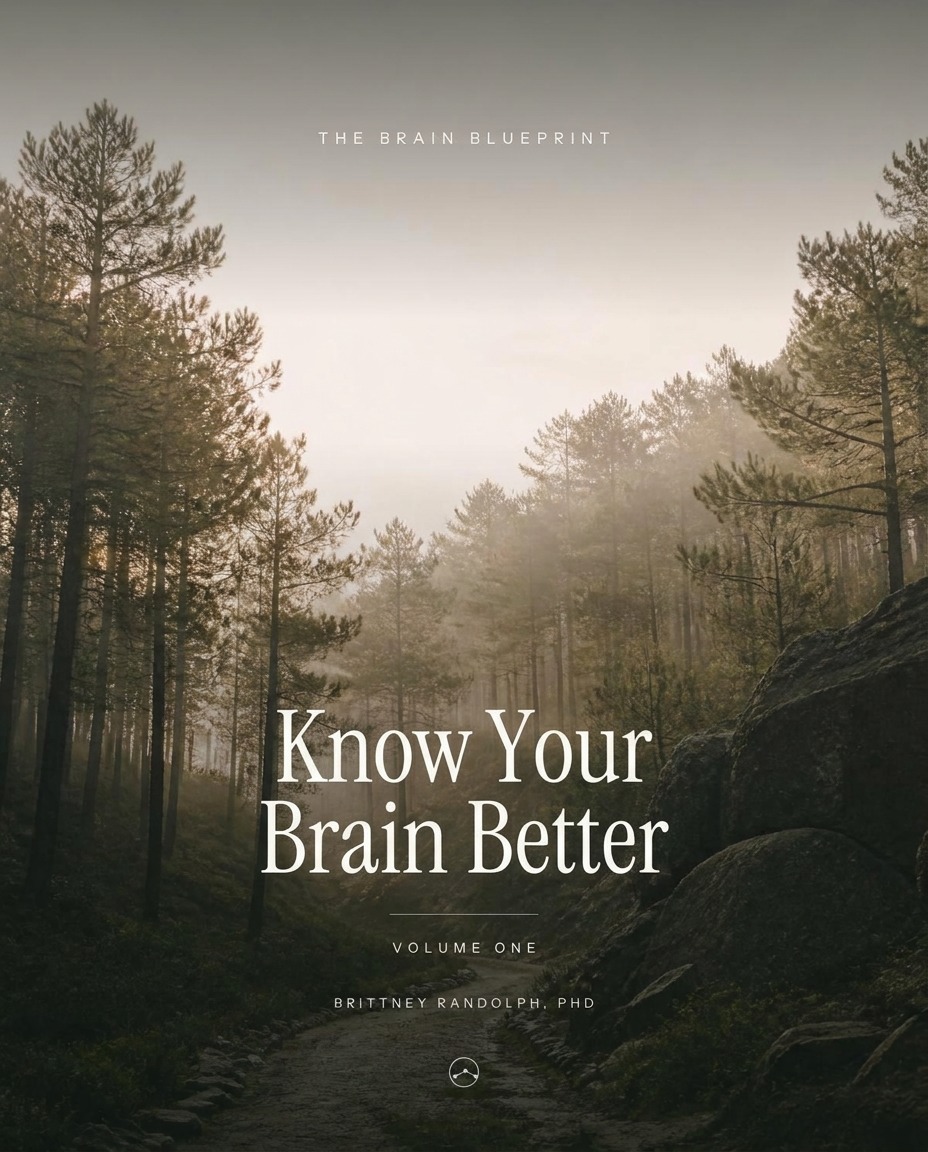
Know Your Brain Better
Practical insights for a clearer mind and a calmer life.
A foundational workbook on attention, executive function, motivation, and the quiet mechanics behind why you do what you do. Written for the person who knows what they should be doing — and still can't seem to start.
- Length
- 72 pages
- Lessons
- 12 lessons
- Completion
- 4–6 hours, at your own pace
- Format
- Digital PDF · print-ready
What you'll learn
- How executive function actually operates — and why willpower is the wrong lever.
- The neuroscience of initiation: what happens in the seconds before you start.
- Why your attention drifts, and the conditions that reliably bring it back.
- How motivation is built rather than summoned, and how to engineer it.
- A personal map of your own cognitive patterns, drawn over twelve lessons.
Who it's for
- Adults who are competent everywhere except in their own routines.
- High-achieving people quietly exhausted by the effort it takes.
- Readers who want the mechanism, not the motivation.
Inside the pages
A few spreads from the workbook — essay, exercise, and figure — reproduced at reading scale.
Lesson 02
The gap between knowing and doing
Intention lives in one system. Initiation lives in another.
The distance between them is not a character flaw — it is a measurable feature of executive function, and it responds to design.
Exercise 05
Map your first ninety seconds
What is the smallest observable action that begins the task?
What is present in the room when starting feels easy?
What is present when it does not?
Figure 4.1
The initiation loop
What's included
- 0172-page designed workbook, delivered as a high-resolution PDF
- 0212 structured lessons with guided written exercises
- 03Printable worksheets and a personal cognitive profile
- 04Lifetime access, including future revisions
Questions
Is this a course?
No. It is a designed workbook — a self-contained document you read, write in, and keep. There are no videos, no logins, and no schedule.
How is it delivered?
As a high-resolution PDF immediately after purchase. It is designed to be beautiful on screen and equally considered in print.
Is this a substitute for therapy or medical care?
It is not. The workbook is educational and may sit alongside clinical care, but it does not replace assessment or treatment.
Also in the series
From the clinical practice
The Brain Blueprint is written by Brittney Randolph, PhD, a clinical neuropsychologist. If reading raises questions about your own attention or memory, formal evaluation is available virtually.