Volume Nine · Planned
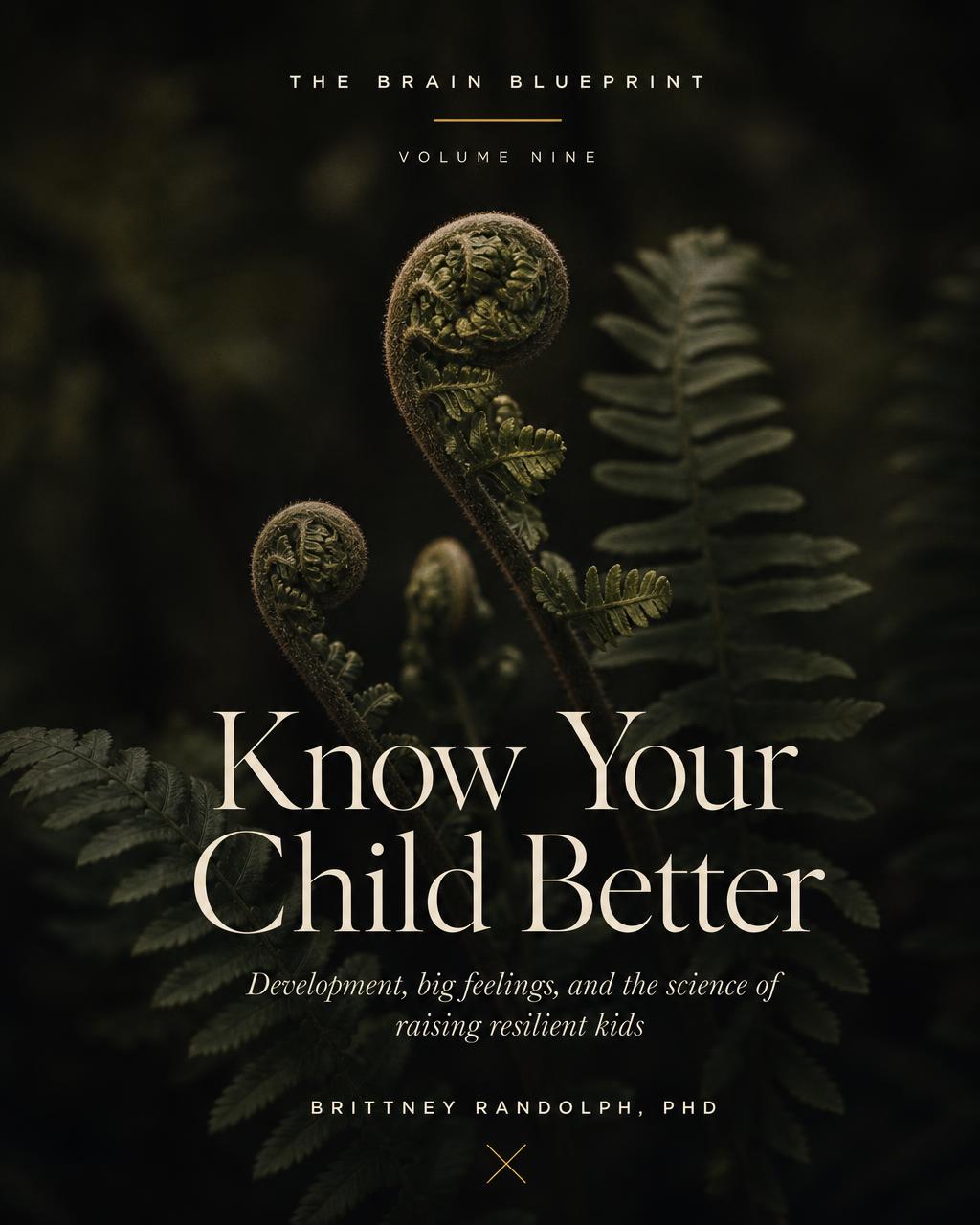
Know Your Child Better
Understanding brain development, big feelings, and raising resilient kids.
Learn how children's brains develop from infancy through adolescence, why behavior makes sense through the lens of neuroscience, and how connection, curiosity, and co-regulation help children thrive.
- Length
- 80 pages
- Lessons
- 12 lessons
- Completion
- 5–6 hours, at your own pace
- Format
- Digital PDF · print-ready
What you'll learn
- How a child's brain develops from infancy through adolescence.
- Why behaviour makes sense once you know what is still under construction.
- How co-regulation works, and why it precedes self-regulation.
- How connection and curiosity build durable resilience.
Who it's for
- Parents who want explanation rather than technique lists.
- Caregivers and educators supporting big feelings daily.
- Anyone raising a child who does not fit the standard advice.
Inside the pages
A few spreads from the workbook — essay, exercise, and figure — reproduced at reading scale.
Lesson 01
Behaviour is developmental information
A child's response reflects the systems that are online, and the ones that are not yet.
Read it as a stage rather than a verdict.
Exercise 03
One hard moment
What preceded it?
What was being asked of your child's brain?
What did co-regulation look like, or could have?
Figure 1.4
Development, in sequence
What's included
- 0180-page designed workbook, delivered as a high-resolution PDF
- 0212 structured lessons with guided written exercises
- 03Printable developmental reference and co-regulation sheets
- 04Lifetime access, including future revisions
Questions
When does it release?
It is in preparation. Join the list and you'll receive one short note the day it becomes available.
Is this a course?
No. It is a designed workbook — a self-contained document you read, write in, and keep. There are no videos, no logins, and no schedule.
How is it delivered?
As a high-resolution PDF immediately after purchase. It is designed to be beautiful on screen and equally considered in print.
Is this a substitute for therapy or medical care?
It is not. The workbook is educational and may sit alongside clinical care, but it does not replace assessment or treatment.
Volume Nine
Know Your Child Better
$79
Also in the series

From the clinical practice
The Brain Blueprint is written by Brittney Randolph, PhD, a clinical neuropsychologist. If reading raises questions about your own attention or memory, formal evaluation is available virtually.